Hot-forging
for high-strength components
Materials
Carbon steel, alloy steel, stainless steel
Volume
Prototype → series production
Hot-forging as one link in a complete supply chain.
Most suppliers sell forgings as raw shapes that someone else has to finish. We don't. At Pamatek, hot-forging sits inside an integrated flow that runs from billet selection through forging and heat treatment to machining, surface treatment and assembly — managed by one team, documented through one QA chain, delivered on one purchase order.
That's the difference between buying a forging and buying a finished component ready for your production line — with the grain flow, mechanical properties and machining stock engineered into the part rather than negotiated after the first sample lands on a CNC bed.


Engineered before
it's forged.
Design for manufacturing
Most forging specifications come in as a finished drawing with the geometry treated as if it could be machined from solid stock. Too often the draft angles, parting line, flash placement and grain flow direction haven't been considered — and the part either can't be forged economically, or arrives with grain orientation working against the load case it was designed for.
We bring forging engineering into the conversation early. Before the die is cut, our engineers review the part geometry, load direction, grain flow logic, machining stock allowance and heat treatment response — the decisions that determine whether the forging delivers the mechanical properties the application demands and whether it is economical to produce at volume.
The earlier we're involved, the more we can remove from your cost and rework. A 30-minute DFM session often saves weeks of iteration later.
Explore other
manufacturing methods.
CNC is rarely a standalone process. We combine it with casting, forming and finishing to deliver complete components — often in a single purchase order.
HQ
Pamatek A/S
DK29841446
Bækgårdsvej 72
4140 Borup
Tel.: +45 70 233 637
© 2026 by Klamer Dueholm Fractionals.
Closed-die forging
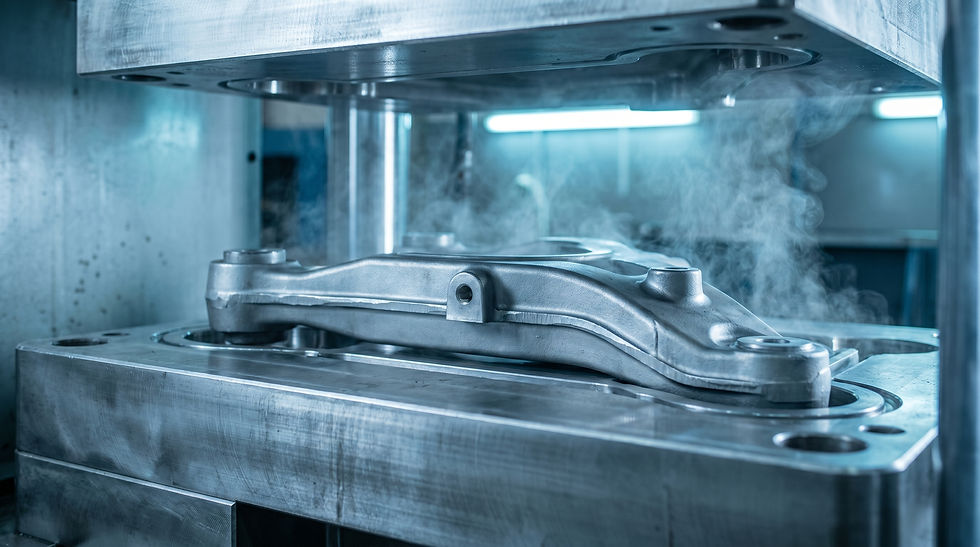
Drop-die forging in matched upper and lower dies — components from 50 g to 25 kg in carbon, alloy and stainless steels. Closed-die forging shapes heated billets between matched upper and lower dies, producing components with controlled grain flow, refined microstructure and mechanical properties that wrought or cast alternatives cannot match. We work with weight ranges from 50 grams to 25 kilograms across carbon, alloy and stainless steel grades, with near-net geometries that reduce downstream machining stock. Die design is engineered against the part geometry, expected volume and material grade — not pulled from a generic library. Flash control, draft angles, fillet radii and parting line placement are decided up front, which determines whether the forging runs cleanly and whether the heat treatment delivers consistent properties batch after batch. Typical applications include drive shafts, structural fittings, load-bearing brackets and components for the wind, fitness and appliance industries where mechanical strength and fatigue resistance are decisive.
.jpeg)
Open-die and upset forging
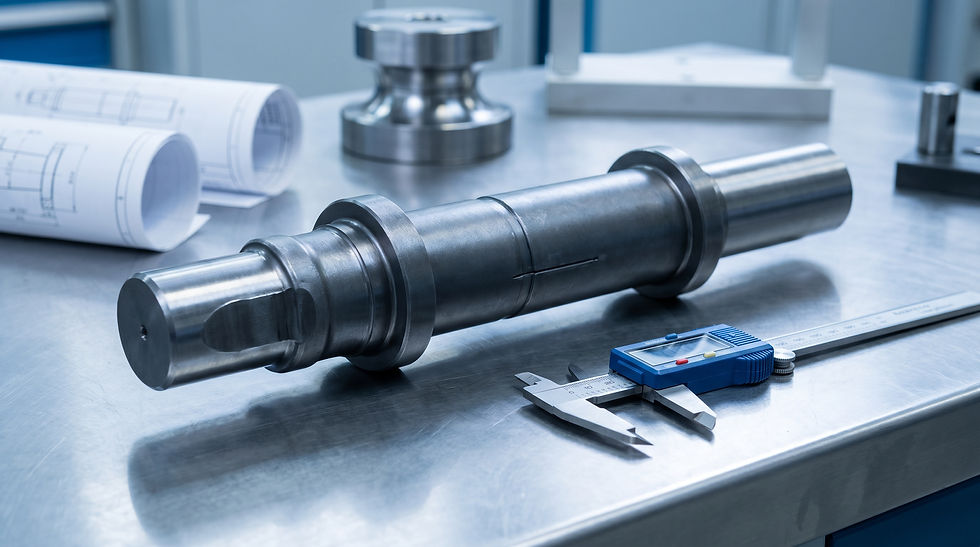
Open-die forging for larger sections and upset forging for headed components — including shafts, flanges and forged blanks for downstream machining. Open-die forging handles geometries and weights where closed dies are not the right answer — larger sections, simpler shapes and components where the forging serves as a refined blank for subsequent machining. Upset forging produces headed parts, flanges and bosses by displacing material axially against a die, retaining grain flow through the formed section. We match the forging method to the part requirement — closed-die for net or near-net geometry at volume, open-die for larger sections or lower volumes, upset for headed and flanged components. The decision is made against the application, not against generic process preferences. Typical applications include shafts, flanged fittings, structural pins and forged blanks feeding into precision machining operations downstream.
.jpeg)
Heat treatment and machining
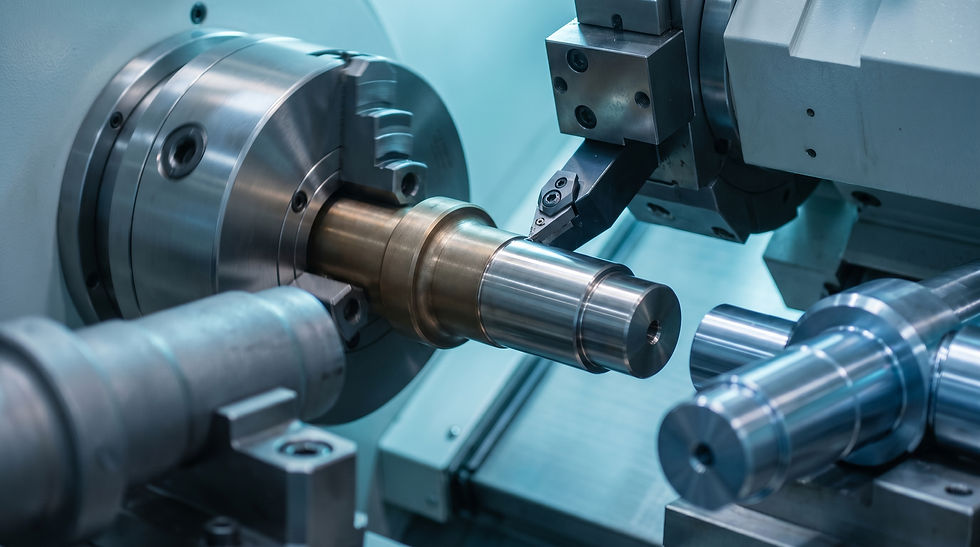
Normalising, quenching, tempering and CNC machining integrated into the same delivery — forging arrives heat-treated and finished, ready for assembly. A raw forging is rarely the deliverable. It needs to be heat-treated to set its mechanical properties, machined to final tolerances on critical features, surface-treated for corrosion protection, and often combined with other components before it reaches the production line. We integrate these operations into the same job, scheduled and documented as one flow rather than four separate sub-contracts. Heat treatment, machining, surface treatment and assembly run on the same QA chain as the forging itself, with material certification preserved end to end. For you, that means one purchase order, one point of contact and one set of inspection records — instead of coordinating multiple suppliers and absorbing the lead time between them.